
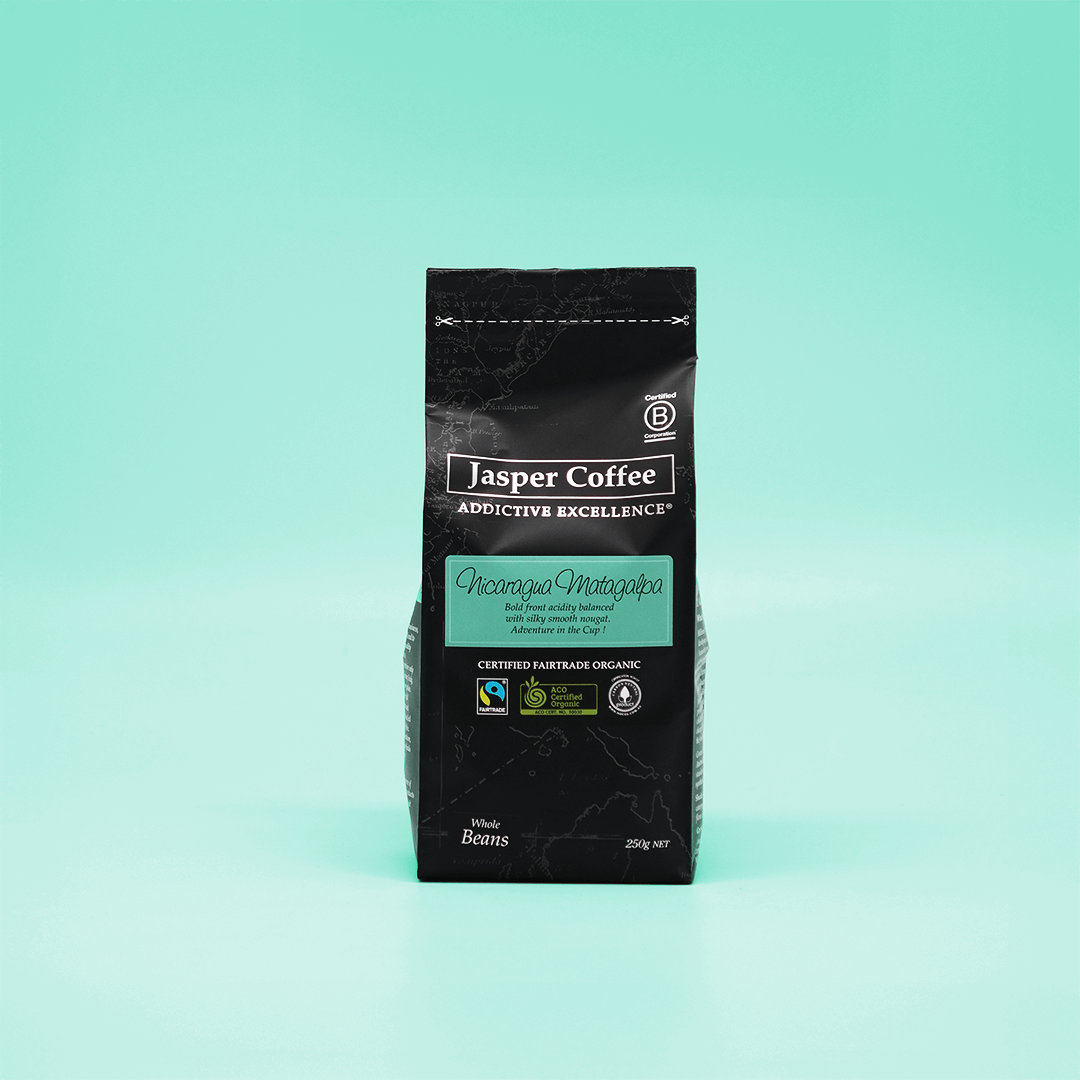
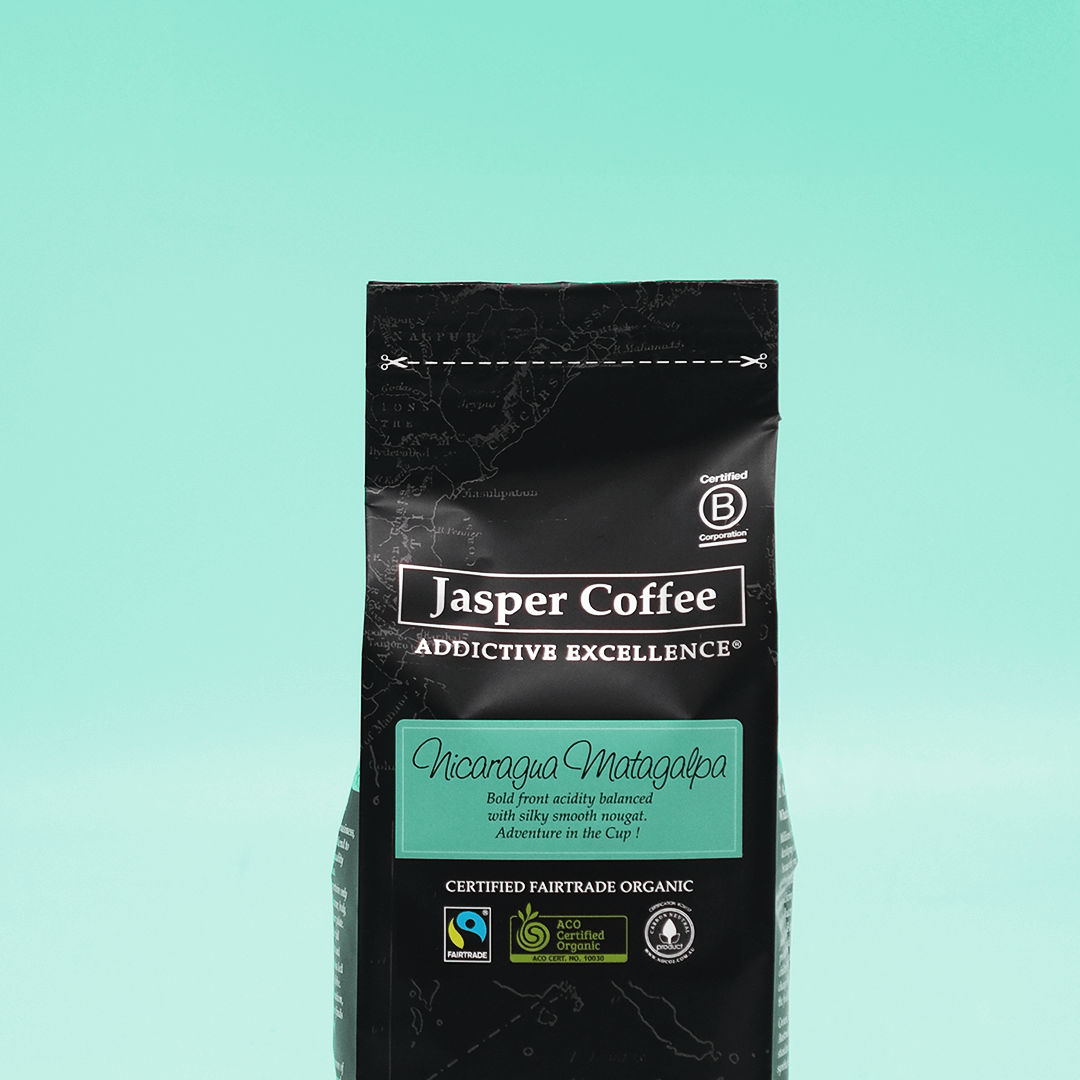
Nicaragua Matagalpa
Sit down with a good book and relax. A smooth, rich chocolatey flavour that keeps you coming back for more.
We dispatch within 1-3 business days, sent out to you via Australia Post
About Nicaragua Matagalpa
Tasting notes
Nougat | Honey | Chocolate
Origin story
Brew recipe
What makes Jasper Coffee Special?


Jasper Coffee is an Australian family owned Specialty Coffee Roaster.
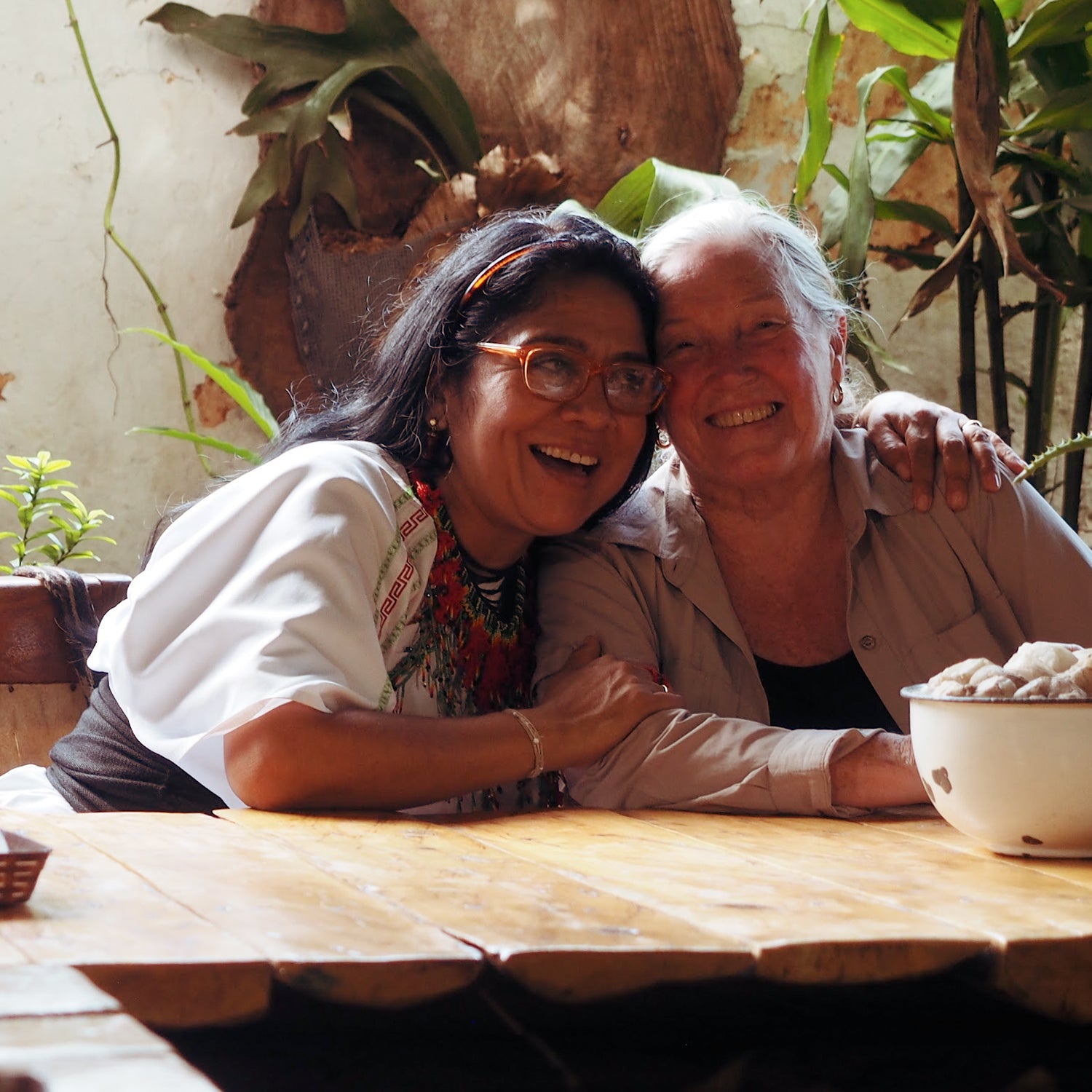
Established in 1989, by these two go getters, Merilyn Parker and Wells Trenfield.
Our Story- FSFariha S.Verified BuyerRated 5 out of 5 stars42 seconds agoOne of my favourites so far
Just the right balance of nutty and fruity
- SGSimon G.Verified BuyerRated 4 out of 5 stars3 days agoEverything you claimed it would be!!
I have not had this coffee before and was intrigued by the tasting notes of nougat, honey and chocolate. I admit, I was a little skeptical, but when I smelled the beans after they had been ground, I was genuinely excited. After the first sip of the first cup I was, and remain, a convert. Wonderfully smooth and sweet, with a refreshing boldness. So much more than a simple 'pick-me-up', I swear it has the power to change my mood for the better.
- KCKat C.Verified BuyerRated 5 out of 5 stars1 week agoSmooth as
Ground fresh for my moccamaster one cup this Nicaragua is incredibly smooth and has the most mellow, easy to drink taste profile. Guests love it, too. If you've been burned by bitter coffee before try this, it's consistently satisfying and will no doubt be my go-to for some time to come.
Jasper are a fab company, selling a wide range of fair trade and organic options, so when I drink my morning brew I am happy to be doing it ethically. Cheers!!!

Our Stores
A welcome oasis away from the hustle and bustle.
Customers fall in love with the rich texture and character of their favourite Jasper Stores. Having arrived at some Worldly destination, in search of the holy brown stuff itself, they are lured in to begin, or continue, on their journey of Exploration, Adventure and Obsession of our World of Fairtrade Organic Coffee.