
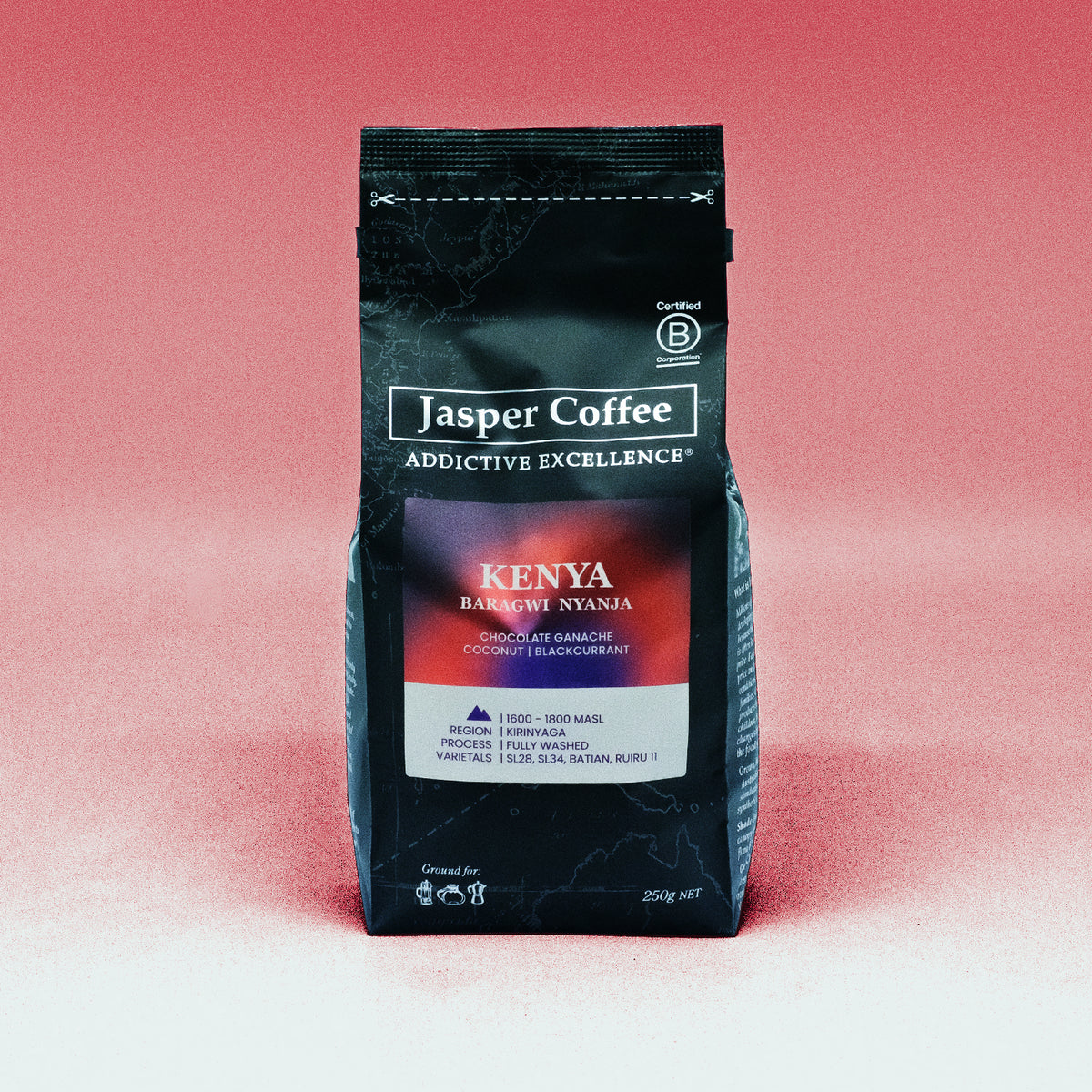
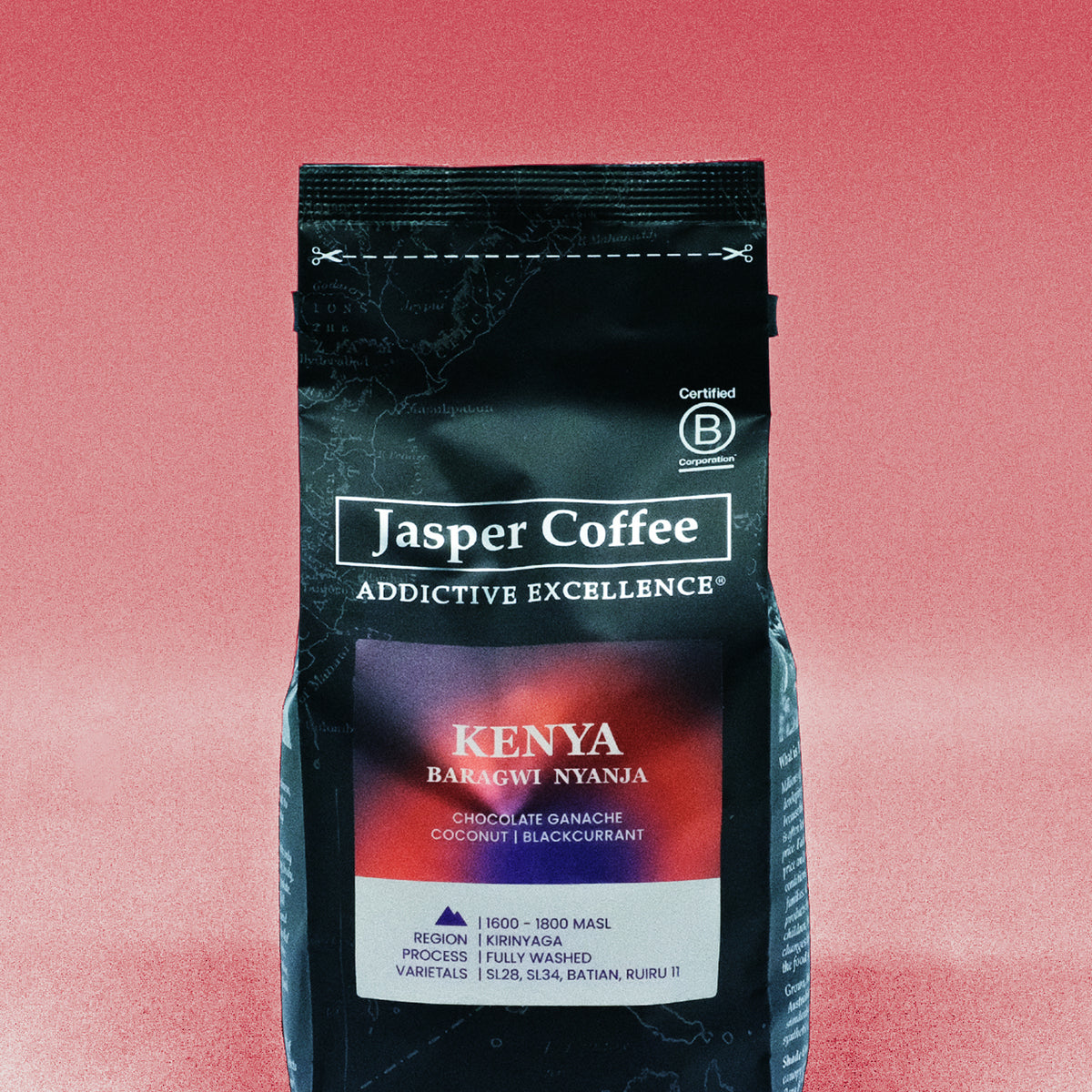


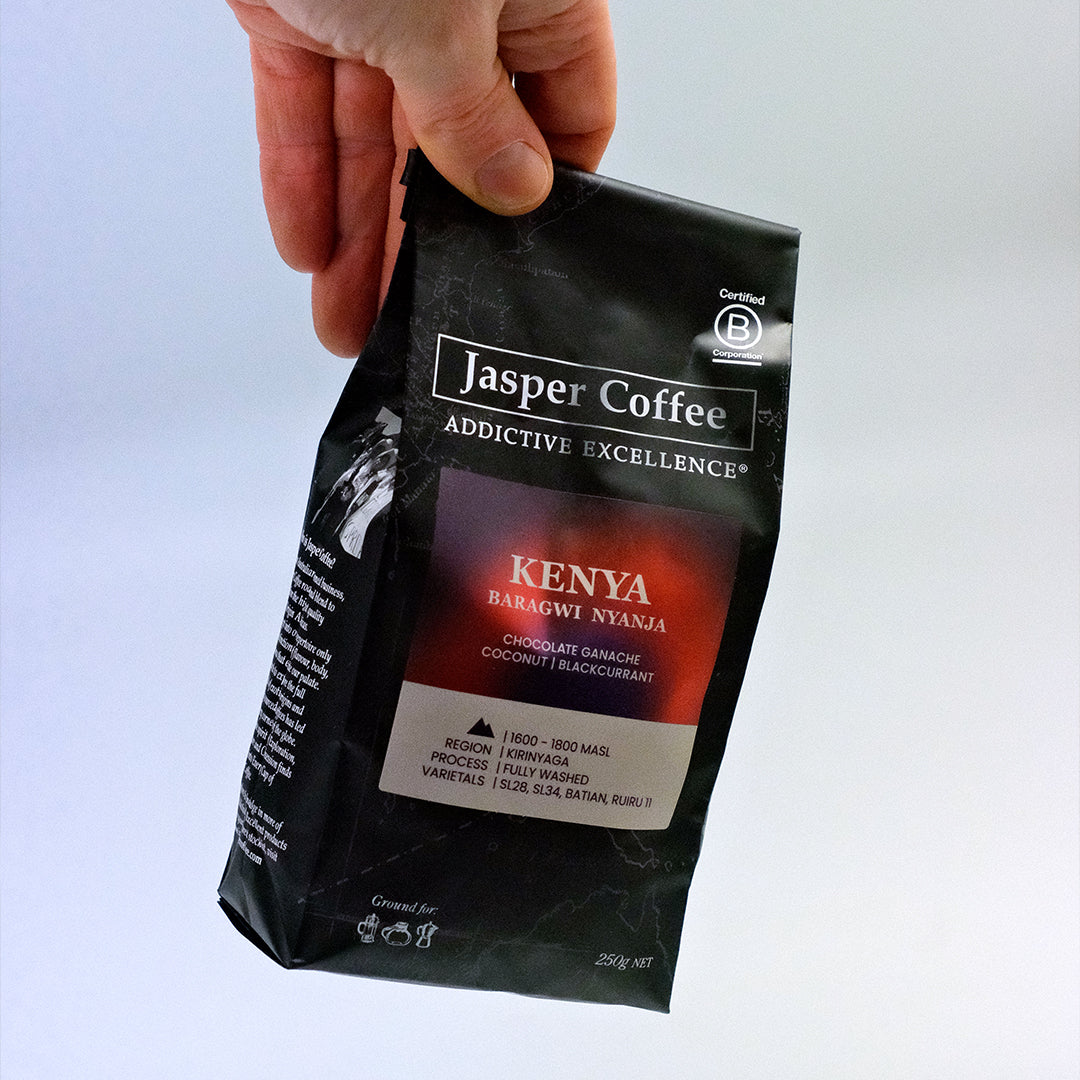

Kenya Baragwi Nyanja
Decadent chocolate ganache leads the way, balanced by creamy coconut and a juicy blackcurrant finish.
We dispatch within 1-3 business days, sent out to you via Australia Post
Kenya Baragwi Nyanja
Sale price$25.00
About Kenya Baragwi Nyanja
Tasting notes
Chocolate Ganache | Coconut | Blackcurrant
Origin story
Brew recipe
What makes Jasper Coffee Special?


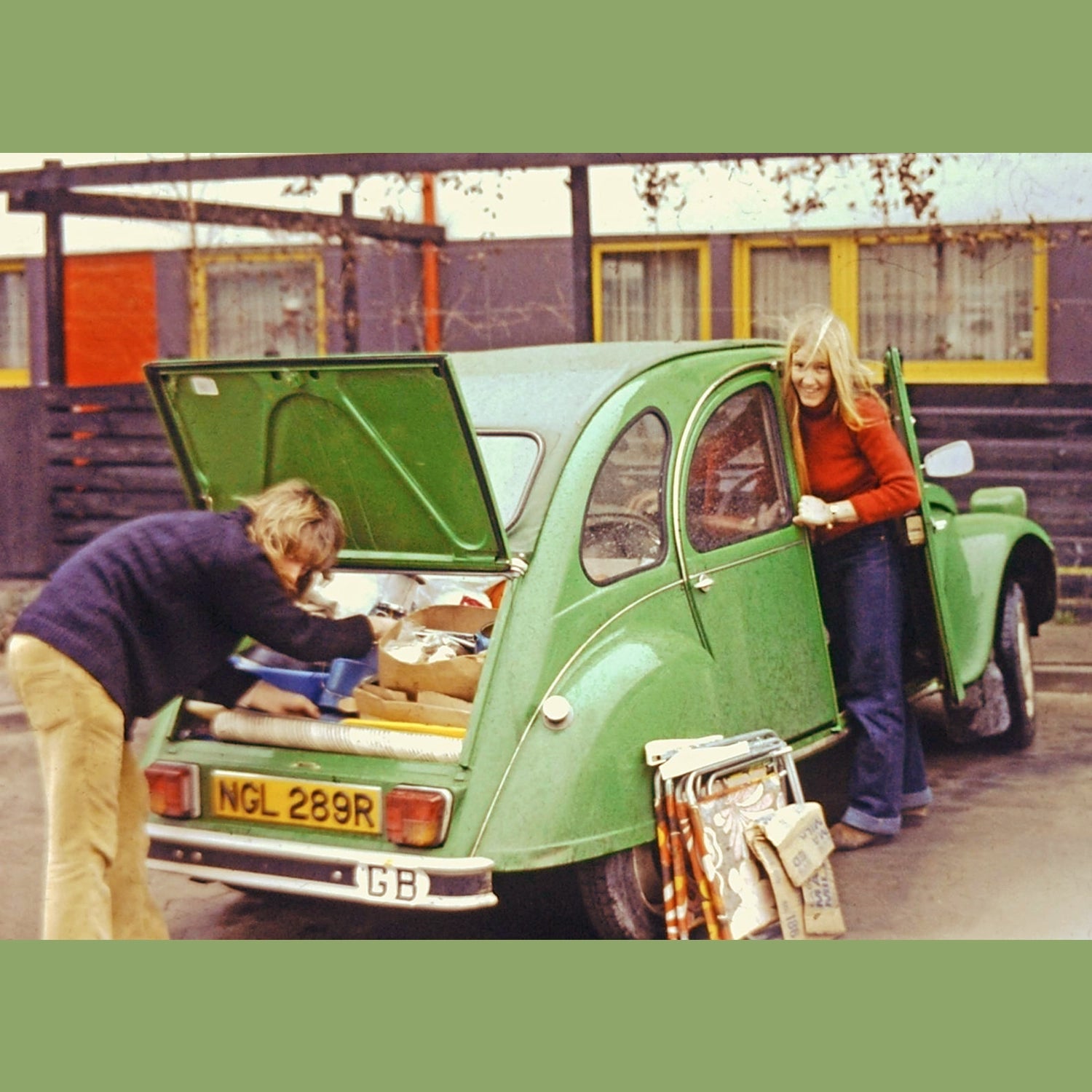
Jasper Coffee is an Australian family owned Specialty Coffee Roaster.
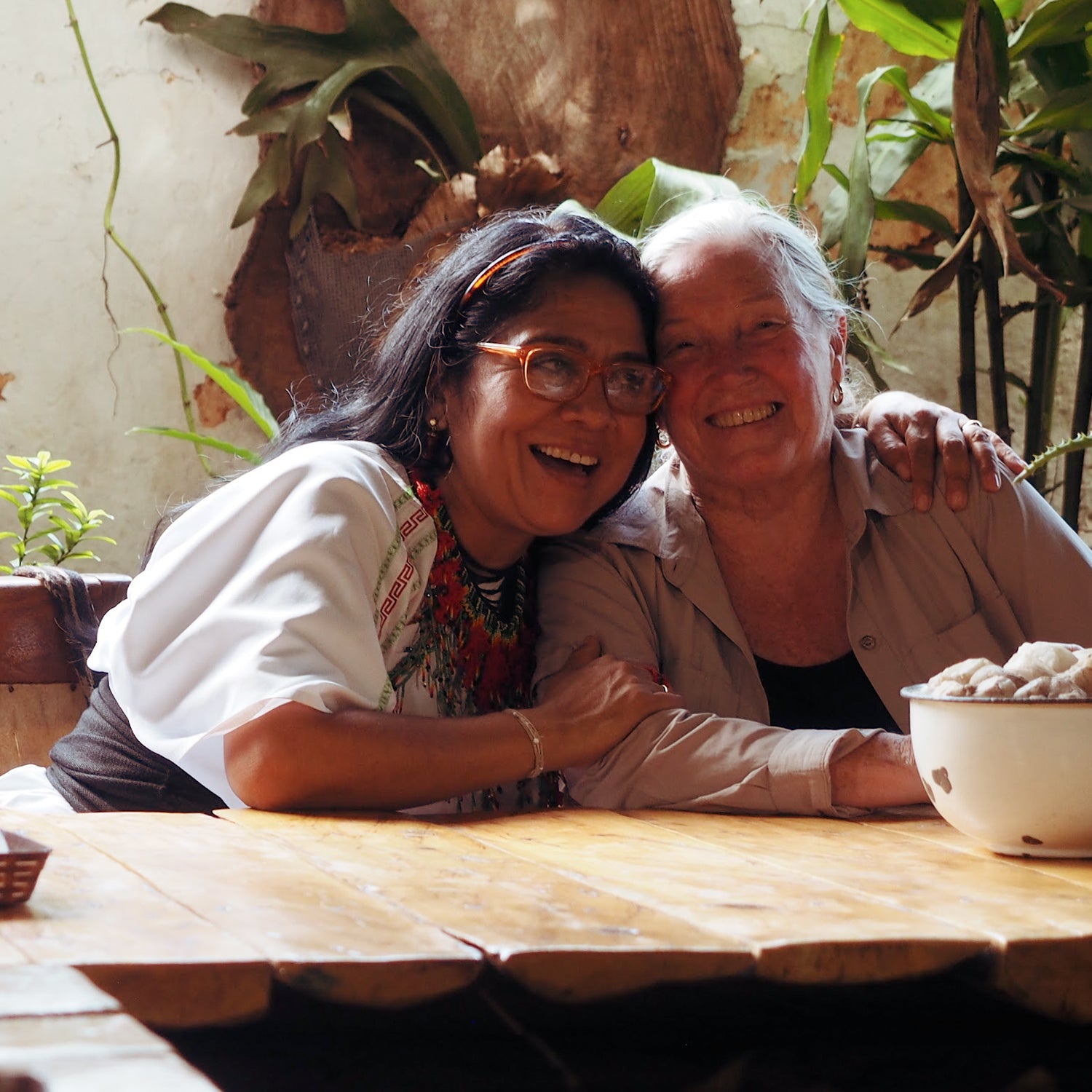
Established in 1989, by these two go getters, Merilyn Parker and Wells Trenfield.
Our Story
Our Stores
A welcome oasis away from the hustle and bustle.
Customers fall in love with the rich texture and character of their favourite Jasper Stores. Having arrived at some Worldly destination, in search of the holy brown stuff itself, they are lured in to begin, or continue, on their journey of Exploration, Adventure and Obsession of our World of Fairtrade Organic Coffee.