If you have ever picked up a bag of coffee labelled wine process and wondered whether someone has tipped shiraz into the tank, you are not alone. The name sounds dramatic. Slightly mysterious. A bit indulgent, too. But in coffee, wine processing is not about adding wine. It is about borrowing ideas from winemaking, especially controlled fermentation, to create a coffee with more fruit, more perfume and a more layered, expressive cup. In practice, the term is often used as a loose umbrella for experimental processing methods inspired by wine, particularly anaerobic fermentation and carbonic maceration.
To understand it, it helps to start with what processing actually is. Coffee begins as a fruit. Once the cherries are picked, producers need to remove the fruit and dry the seeds inside so they can become stable green coffee. That post-harvest stage has always shaped flavour. Washed coffees tend to feel cleaner and brighter. Naturals can feel fruitier and fuller. What newer processing methods do is push that flavour development further by controlling fermentation more deliberately. Research shows that fermentation is not just incidental background activity. Microorganisms feed on sugars and plant material during processing, producing compounds that can influence the final cup.
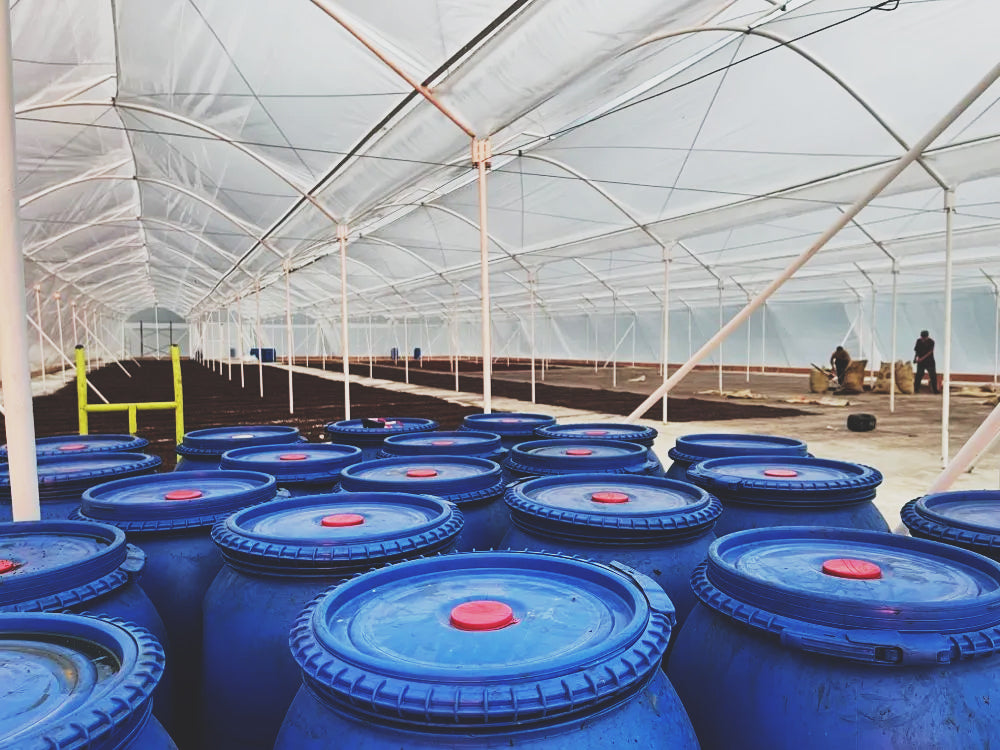
So what does wine process usually look like on the farm? It varies, which is part of the reason the term can feel a bit slippery. A producer may ferment whole cherries or depulped coffee in sealed tanks with very little oxygen. In anaerobic fermentation, the environment is oxygen-limited. In carbonic maceration, a method borrowed more directly from wine, the tank is actively flushed with carbon dioxide to drive oxygen out. Time, temperature and vessel choice all matter, because they influence microbial activity and, with it, flavour development. The whole point is control. Not chaos. Done well, it is careful, intentional work.
And this is where the flavour shift happens. Because fermentation is being steered more closely, the cup can become more aromatic, more fruit-forward and sometimes more unusual than a classic washed or natural coffee. Think vivid berries, tropical fruit, stewed plum, sangria-like sweetness, floral lift, or a slightly boozy perfume. Coffee research has found that controlled fermentation can help develop new sensory profiles and alter the chemical composition of the beans. That does not mean every wine processed coffee tastes the same. Far from it. Variety, climate, ripeness, processing choices and roasting still matter enormously. But it does mean the producer has another way to shape the final flavour.
It is also worth saying that wine processing is not automatically better. It is simply one approach, and a demanding one at that. The same tight control that can create dazzling fruit and complexity can also go the other way if fermentation runs too hard or too long. Even the Specialty Coffee Association notes that the recent explosion in post-harvest innovation has brought excitement, but also confusion about what methods require and when they are most suitable. The best wine processed coffees still need the fundamentals: ripe fruit, careful picking, clean equipment, disciplined monitoring and a roast that knows when to step back and let the coffee speak.
For producers, that experimentation can be commercially meaningful. Review research on coffee fermentation notes that producers are increasingly exploring controlled fermentation to create differentiated sensory profiles and improve market position in specialty coffee. In other words, wine processing is not just a bit of theatre for the back of the bag. It can be a serious tool for adding value, standing out, and expressing a coffee’s potential in a new way.
For drinkers, the easiest way to think about wine process is this: it is coffee processing with fermentation in sharper focus. Not wine in your coffee. Not a gimmick, at its best. More a way of coaxing out a wilder, juicier, more extravagant side of the coffee cherry. Sometimes bright and playful. Sometimes lush and almost decadent. Always interesting when done well.
So if you see wine process on a label, expect a cup with personality. A bit more fruit. A bit more fragrance. A little more swagger. And perhaps, if all has gone to plan, a coffee that tastes as though the producer has taken something already beautiful and turned the dial just a little further.
Image: The Perfect Daily Grind.